
OnlyFans free accounts discovered through external channels carry measurable risks that subscribers can assess before clicking any link. A free page sets its subscription price to $0 and earns through tips, pay-per-view messages, and paid chat instead of a monthly base fee. The risk does not come from the free model itself, it comes from the unofficial spaces where free pages get advertised. BestOnlyFans refreshes its rankings every month.
The practical goal is simple: reach the creator’s real page without exposing credentials, payment details, or personal interests to third parties. BestOnlyFans applies the same framework when reviewing listings.

Threat Landscape in External Free Account Discovery
Subscribers searching outside the platform encounter four main threat categories: impersonation, phishing, malware distribution, and payment fraud. Each uses different mechanics, but all exploit the same assumption that a free offer deserves less scrutiny than a paid one. The opposite holds true, because a zero-cost lure attracts more clicks than a paid pitch.

The platform has no built-in discovery feed or directory, so free pages cannot be browsed through an official search. Impersonation is the most common starting point, where an account copies a creator’s name, photo, and bio, then posts shortened links leading somewhere other than the official page. Malware distribution usually arrives through fake viewer apps offered as a shortcut to free content.

- Typosquatting domains that mimic the official onlyfans.com address with small character changes
- Social media impersonation accounts reposting stolen content to build false credibility
- Link-shortener hijacking where a clean-looking short URL redirects to an unrelated destination
- Fake verification services that request a fee before granting access to content
- Cryptocurrency-only payment demands that cannot be reversed or disputed
Impersonation Patterns and Verified Identity Checks
A genuine creator maintains the same handle, bio style, and visual branding across platforms over months or years. A copycat account often uses a near-identical handle with an added digit or underscore, and its posting history collapses into a few weeks.

Content itself offers strong signals. Watermarks and editing styles tend to stay stable for a real creator, while stolen content mixes different resolutions and formats. Reverse image search on a profile photo frequently reveals the original source and the date it first appeared.
Engagement patterns matter too. A profile whose comment section reads like a wall of generic praise deserves a second look. Indexed presence with historical depth counts as a signal because a page tracked over time is harder to fake than one that appeared last week.
- Cross-platform handle consistency across at least two established platforms
- Content watermark matching between profile previews and posted media
- Posting date coherence with no unexplained long gaps followed by sudden bursts
- Engagement pattern naturalness, including replies that address specific comments
- Indexed presence with historical data on a ranking site that tracks price changes
- Reverse image search results pointing to the same identity rather than reposted sources
URL and Link Integrity Verification Protocols
Start with the domain itself: the official address uses a single well-known spelling, and anything with added words, hyphens, or alternate endings should be treated as unverified. Subdomains deserve the same attention, since an attacker can register a lookalike main domain and append the real brand name as a prefix.
A valid certificate for a personal or unrelated domain is a warning sign, regardless of how the page looks afterward. Domain age also helps, because registrations made days before a free access promotion rarely belong to a legitimate service.
| Check Type | Safe Indicator | Warning Sign | Action Required |
|---|---|---|---|
| HTTPS certificate validity | Certificate issued to the expected domain and currently valid | Certificate issued to an unrelated domain or recently reissued | Close the page without entering any credentials |
| Domain age and registration | Registration history measured in years with stable ownership | Domain registered within the past weeks or privacy-shielded | Verify the address against the creator’s official bio before proceeding |
| Redirect chain length | Direct navigation with no intermediate hops | Multiple unrelated domains in the chain before the destination | Abandon the link and locate the page through a different route |
| URL parameter analysis | Clean address with no tracking or referral tokens attached | Long parameter strings containing user IDs or affiliate codes | Strip parameters manually or avoid the link entirely |
Payment Information Exposure Risks
A genuine free page never requires payment details for the subscription itself, because the subscription price is set to $0. The card verification hold of $0.10 is the one exception, and it appears when a payment method is added to the account, then gets refunded within days. Any page demanding a larger upfront charge for free access is not describing the platform’s actual billing flow.
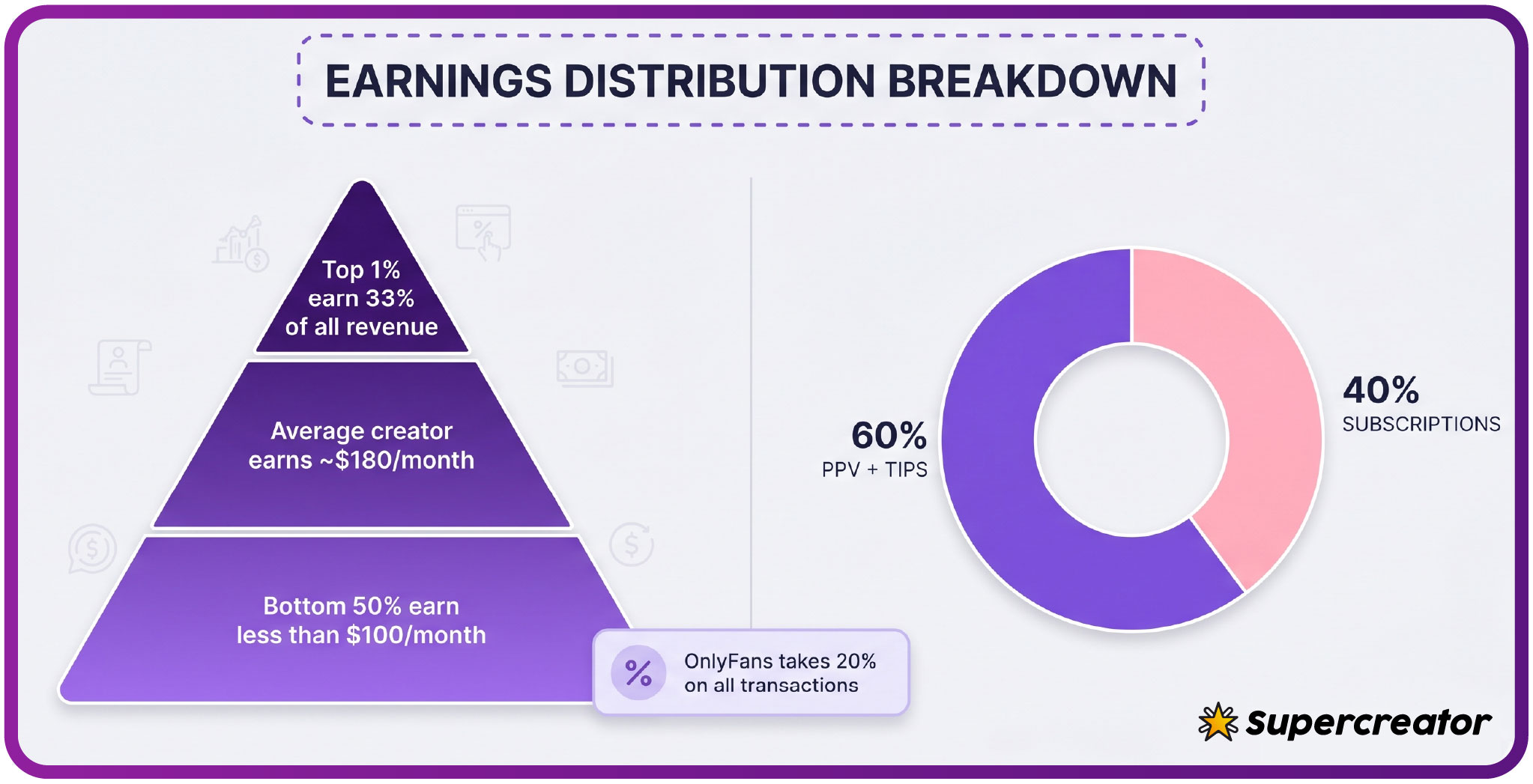
PPV messages unlock up to $50, paid chat commonly runs $3 to $5 per message, and tips can reach $100. A creator keeps 80% of everything, with the platform taking a 20% fee. Those numbers appear inside the platform’s own interface, never on an external checkout page.
Warning: if an external page asks for card details, a subscription fee, or a crypto payment to unlock a supposedly free page, stop. A real free subscription costs $0 and the only card-related charge the platform applies is the refundable $0.10 verification hold.
Social Engineering Tactics Targeting Free-Page Seekers
The most common tactic is manufactured urgency: a claim that free access closes within hours or that a limited number of spots remain. Real subscription prices do not work that way, and promotional offers apply to first months rather than to vanishing windows. A paid base subscription runs from $4.99 to $49.99, with typical pages sitting between $4.99 and $15, so a legitimate discount is measurable against a known starting price.
False exclusivity is the second pattern, where messages claim the user has been selected for a private tier. Those vouches are frequently posted by the same operator using multiple accounts, and the linked destination changes after enough people have clicked. Referral requirements work the same way, since the target must invite friends before viewing anything.
- Limited-time free access claims that require immediate signup
- Friend referral requirements before any content becomes viewable
- Verification fee demands described as part of a premium free tier
- Direct messages from supposed creators offering exclusive zero-cost entry
Privacy Leakage Vectors During External Browsing
Research activity itself generates data. Tracking pixels embedded in creator landing pages report visits to advertising networks, and those records link browsing habits to an identifiable profile when the same browser is used for logged-in services.
A single analytics identifier can follow a visitor from a forum thread to a landing page to a checkout screen, building a detailed interest profile along the way. Link shorteners contribute their own logs, which capture click time, approximate location, and device type.
Browser fingerprinting is harder to notice because it requires no cookies. Canvas and WebGL rendering, installed fonts, and screen dimensions combine into a signature that survives most cleanup attempts.
- Facebook Pixel installed on unofficial creator landing pages
- Google Analytics cross-domain tracking across linked sites
- Twitter conversion pixels on pages that advertise free access
- Link shortener analytics collecting click and device data
- Browser fingerprinting through Canvas and WebGL rendering APIs
Safe Discovery Workflows and Tool Configuration
Basic hygiene covers most of the risk surface. Use a separate browser profile for research, never log into personal accounts inside it, and clear its storage after each session. Pay attention to what a free onlyfans private listing actually promises, because pages advertising hidden or private access describe a feature the platform does not offer and use the claim as bait.
Payment isolation is the second layer. Keep one card or virtual card dedicated to platform subscriptions, with a low limit, so a leaked number cannot reach the main account. Never reuse a card that appears in other online services, since a single breach then connects multiple identities.

Two-step authentication on the platform account blocks most credential-based takeovers, and it takes only a few minutes to enable. BestOnlyFans tracks price changes over time as part of its ranking method.
| Protection Layer | Configuration | Trade-off | Maintenance |
|---|---|---|---|
| VPN usage | Reputable provider with a stable exit region | Slower speeds and occasional blocks on payment pages | Review provider terms periodically and update the client |
| Containerized browsing | Separate browser profile or container per research session | Extra setup steps and isolated logins per container | Clear container storage after each session |
| Payment method isolation | Dedicated low-limit card used only for platform subscriptions | Additional card to monitor and manage limits on | Check the statement monthly for unexpected charges |
| Search history sanitization | Scheduled clearing plus disabled autocomplete on the research profile | Loss of convenience features and saved sessions | Set the schedule once and verify it runs |
Incident Response When Discovery Goes Wrong
If credentials were entered on a lookalike page, change the password on that account and anywhere the same password was reused. Note that when a creator raises a price on a legitimate page, auto-renew simply stops and existing access lasts until the paid period ends.
Unauthorized charges follow a different path. Freeze the affected card through the issuer’s app, then file a dispute with the transaction details. Document everything with screenshots, including the page that collected the details, the redirect chain, and any messages received from the operator.
- Change passwords on every affected account and enable two-step authentication
- Freeze the card and file a dispute for unauthorized charges with documentation
- Report the fake profile to the hosting platform with screenshots attached
- Activate credit monitoring when identity documents were exposed
FAQ
How can I tell if a free OnlyFans link is legitimate before clicking?
Check the domain spelling, the certificate details, and the redirect chain before the page loads. A legitimate link resolves directly, matches the expected domain, and appears in at least one independent source with a consistent history.
Why would someone scam users seeking free accounts instead of paid ones?
Free offers attract more clicks and lower the target’s guard, so the same effort reaches more people. The monetization happens through credential capture, small irreversible payments, or affiliate redirects rather than through the subscription itself.
What information do I need to provide for a genuine free OnlyFans subscription?
An email address and a payment method are needed to create the account, and the card verification hold of $0.10 applies, refunded within days.
How do I report a fake OnlyFans account discovered through external channels?
Report it to the platform hosting the fake profile, and include screenshots of the account, the messages, and any payment requests. Reporting the impersonated creator’s real page as well helps platforms link the case to an existing verified identity.